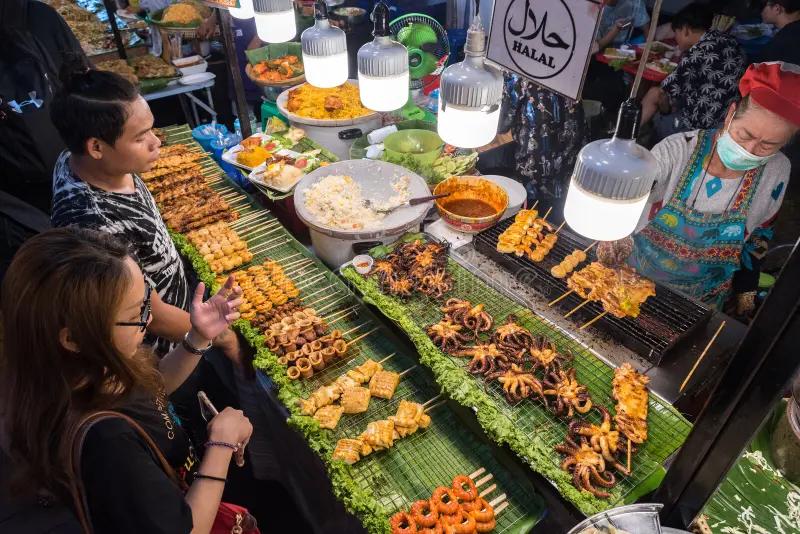
Thailand — a predominantly Buddhist nation — is positioning itself as a rising contender in Asia’s halal industry, aiming to rival Malaysia’s long-standing leadership in halal goods, services and tourism, noted Al-Jazeera. Bangkok and other Thai regions are boosting halal-focused efforts to attract Muslim consumers, strengthen halal certification, and expand exports and travel-friendly amenities.
Although Thailand’s Muslim population is a small minority, the country is home to tens of thousands of halal-certified products, thousands of halal restaurants, and a growing ecosystem of Muslim-friendly services. Thai authorities have unveiled a four-year halal industry action plan that promotes Thai halal goods and standards, which officials hope will increase trust among Muslim customers and visitors worldwide.
The drive reflects broader economic goals: boosting tourism, supporting halal exports and securing a competitive place in the global halal marketplace. However, Thailand faces challenges in building the credibility and certification integrity that countries like Malaysia have established over decades.
1. HALAL INDUSTRY DEVELOPMENT STRATEGY
Thailand’s government launched an action plan to strengthen its halal industry standards, promote Thai products and support businesses in gaining international halal certification. This policy aims to elevate Thailand’s position among halal hubs in Asia, despite the country’s Buddhist majority.
2. IMPORTANCE OF TRUST & CERTIFICATION
Local vendors and analysts say that proper certification is essential for building confidence with Muslim consumers. There are concerns about misuse of halal labels in informal markets, which could harm Thailand’s reputation among Muslim travellers and exporters if not addressed.
3. HALAL OUTPUT AND EXPORTS
Thailand currently has more than 15,000 companies, 166,000 products and 3,500 halal-certified restaurants, making it a significant halal producer and exporter in Southeast Asia. Its halal exports to Organisation of Islamic Cooperation (OIC) countries — including sugar, rice and frozen chicken — reached about US$4.1 billion, highlighting the economic potential of halal goods beyond tourism.
4. RISING MUSLIM-FRIENDLY TOURISM INFRASTRUCTURE
Thailand’s inclusion in the Mastercard-Crescentrating Global Muslim Travel Index highlights its achievements in halal-friendly travel. The country ranks high among non-OIC destinations for the availability of halal food and services, especially in major tourism hubs, helping attract Muslim visitors.
5. COMPETITION WITH MALAYSIA
Experts note that Malaysia—a Muslim-majority nation with well-established halal certification systems and strong credibility in both food and non-food sectors—still holds a competitive advantage in the region. Thailand’s strategy aims to close this gap over time, but industry observers say building long-term trust and recognition will take sustained effort.
This article was extracted from news published by Al-Jazeera. Access the original article at https://www.aljazeera.com/economy/2024/10/17/thailand-where-buddhism-reigns-challenges-malaysia-for-asias-halal-crown